Mastering PET Bottle Manufacturing: Challenges and Line Optimization Strategies
PET (Polyethylene Terephthalate) dominates beverage packaging for good reason, it's clear, lightweight, durable, recyclable and therefore very economical. While there are other container formats available, seasoned PET bottle manufacturing teams know the real challenge is not in the material itself, but in the complex, fast-paced production environment it demands.
Key Takeaways
- PET bottle manufacturing lines are vulnerable to conveyor back pressure, preform handling defects, surface scuffing, and structural sensitivity during lightweighting projects.
- A 1-2% drop in line efficiency can cost beverage manufacturers tens of thousands of dollars per week in scrap, rework, and delayed output.
- Real-time force monitoring using Digital Container Twins gives maintenance teams the data needed to identify damage sources before they compound into costly downtime.
- Preform drop height, conveyor rail friction, and cap application settings are three controllable variables that directly drive the most common PET bottle defects.
- Sustainability goals are achievable without sacrificing line performance by using rPET blends in standard high-speed beverage manufacturing environments.
- Proactive operational assessments are the most effective path to zero-defect PET bottle manufacturing at scale.
What Makes PET Bottle Manufacturing So Demanding
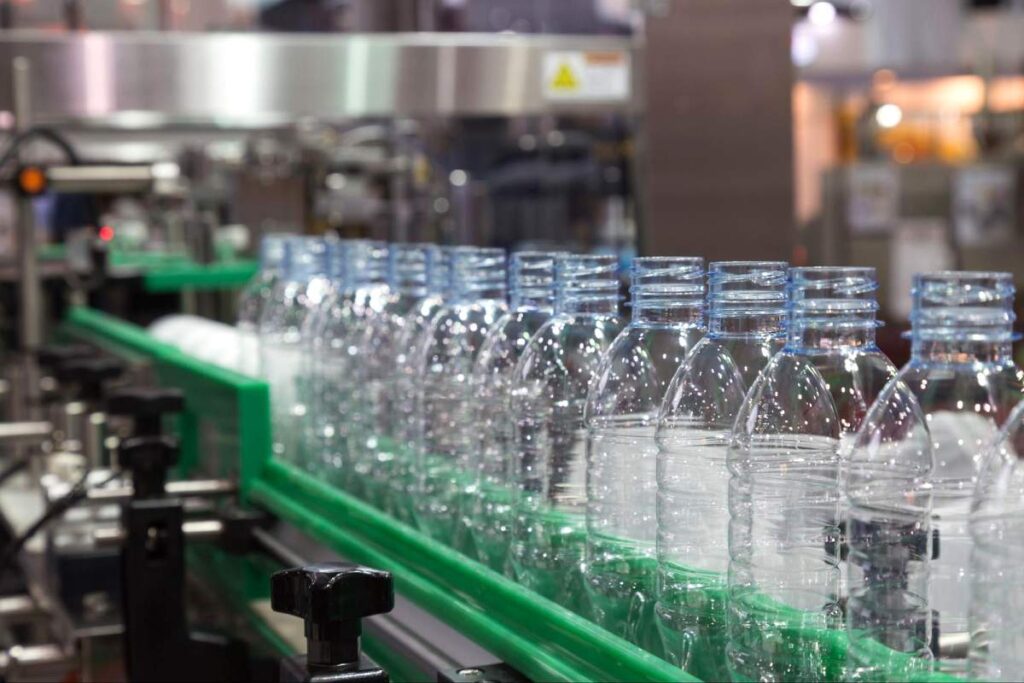
PET bottle manufacturing starts with one of the most economical materials in beverage packaging: clear, lightweight, durable, and fully recyclable. PET bottle manufacturing lines, though optimized for speed, frequently run into issues that silently drain productivity and profitability. Excessive line pressure creates bottlenecks and jams. Mishandled preforms lead to nicks or warping that compromise sealing.
Over- or under-tightened caps result in flat drinks or customer complaints. Even superficial scuff marks (caused by friction on conveyor rails) or dents can downgrade product quality. Left unchecked, these PET bottle defects compound quickly across PET bottle manufacturing lines and can halt entire production within minutes. A single misfeed or a warped preform can halt entire lines. Over the course of a week, a 1–2% drop in line efficiency can cost manufacturers tens of thousands of dollars in scrap, rework, and delayed output. The loss isn’t just material, it affects customer confidence and brand reputation.
Top PET bottle manufacturing facilities implement intelligence-gathering solutions that identify sources of damage, excessive shock and pressure during conveyance. SmartSkin’s container twin technology replicates the dimensions of the PET bottles and performs to provide a granular level insight into the various forces acting on the body of the containers. Take a look at how SmartSkin can tackle common forms of defects observed in PET manufacturing.
Top Challenges in PET Bottle Production Lines
1. Conveyor Back Pressure and Line Flow Problems
Managing the flow of bottles along conveyors is critical. Excessive back pressure during conveyance often results in jams, gaps, or misfeeds. On the other hand, not enough pressure causes tipped down bottles which also leads to downtimes. Additionally, high levels of shock and impact experienced by bottles can cause deformities which further reduce line efficiency and increase waste.
How SmartSkin helps: SmartSkin's solutions give maintenance teams the visibility they need to identify pressure buildups across PET bottle manufacturing lines before they escalate into costly downtime. Efficient PET bottle manufacturing facilities use data gathering technology that monitors pressure levels and identifies where in the conveyor lines excessive pressure may be occurring. SmartSkin gives maintenance teams the visibility to detect PET bottle defects at the source before they escalate into costly downtime.
2. Preform Handling Defects
Dropping hot preforms from excessive heights into containers can nick or chip them, especially around the finish. These defects may lead to sealing failures, resulting in gas loss and spoilage.
How SmartSkin helps: In PET bottle manufacturing, container twin technology provides on-site teams an accurate assessment of the shock forces acting on the preform bodies due to the fall can help them adjust height levels to reduce the frequency of these pre-form defects.

Unlocking operational excellence in food and beverage production.
A 38-year industry veteran breaks down the real cost-benefit of deploying SmartSkin across food and beverage production lines.
3. Surface Dents and Scuffing
Friction from conveyor side rails or improper speed/lubrication settings can cause scuff marks on bottles and in worse cases-dents. Though scuff marks are considered more minor, they affect aesthetics especially on surfaces not covered by labels. On the other hand, dents bigger than ⅛ of an inch are considered severe damage which could seriously impact brand image lead to rejects, QA holds and downtime.
How SmartSkin helps: Across PET bottle manufacturing lines, sensors covering the surface of the container twin replicas can identify excessive sidewall pressure forces and where on the line the bottles are experiencing friction that is resulting in scuffs. Pressure readings found using SmartSkin’s technology have helped global manufacturers reduce rates of damages on the surface of PET bottles.
4. Lightweighting Pressure and Structural Sensitivity
For a competitive and economic advantage, PET manufacturers are determined to reduce bottle weight. While it may be beneficial in the long run, this reduced size also increases sensitivity to:
Blow process deviations
Handling Damage
Collapse under vacuum or excessive pressure.
How SmartSkin Helps: Balancing material reduction in PET bottle manufacturing with mechanical performance and shelf appeal is an ongoing challenge but it is also where solutions like SmartSkin shine. Having historically helped a major beverage manufacturer carry out a lightweighting project in over 3 months, the solution’s ability to adapt their container twins to different size requirements as well as detect forces of pressure, shock, tilt or rotation acting on the body of the bottle are monumental in ensuring the success of lightweighting initiatives.
Beyond diagnostics, many companies are adopting operational audits, comprehensive evaluations of production lines, to uncover bottlenecks, improve throughput, and enhance overall efficiency. These assessments, when done regularly, offer a proactive approach to manufacturing excellence.
Elimination of major can damage for a Light weighting project
A beverage plant was told their line couldn't handle a lightweighting project without a $1M+ equipment replacement. SmartSkin proved otherwise in 3 months.
The PET Bottle Manufacturing Process: From Resin to Finished Bottle
Understanding the full PET bottle manufacturing process helps teams pinpoint exactly where defects originate and how to prevent them. The PET production journey starts with resin (frequently imported from Asia and other countries) which is delivered in granular form and stored in massive silos. This resin is then fed into molding machines, to create "preforms," which resemble thick-walled test tubes.
Each injection cycle can produce anywhere from 48 to 198 preforms, depending on mold configuration. Most preforms are made externally by a vendor or COOP and sent to the plant. At the PET bottle manufacturing facility these preforms are transferred to blow molding machines (often integrated directly with filling lines) for the next phase. Here, preforms are reheated, stretched, and blown into their final bottle shape using a high-pressure air process. This “stretch blow molding” technique allows precise bottle shaping and consistency at scale.
Finished PET bottles can run directly from the blower to the filler, and they can also be blown a distance from the filler and conveyed and transported via air conveyor (most often) or table top conveyor. They are then capped, labeled, packed into configurations (6-pack, 12-pack, etc.), and finally palletized for distribution.
Sustainability in PET Bottle Manufacturing: What Producers Need to Know
Across PET bottle manufacturing, recycled PET (rPET) is gaining traction as sustainability pressures mount, with industry data showing recycling rates and demand for recycled content continuing to rise across beverage packaging. While virgin PET remains easier to process and is often less expensive, many producers are now using blends, such as 80% virgin and 20% recycled, to reduce environmental impact. Some operations even use 100% rPET when economically viable.
Supply chain limitations, such as the availability and quality of recycled resin, often dictate the recycled content. Nonetheless, rPET offers a practical route for companies to meet sustainability goals, reduce landfill waste, and enhance brand image.4
In PET bottle manufacturing, even small gains in material efficiency compound into significant cost and sustainability benefits over time. In addition, implementing SmartSkin technology helps PET bottle manufacturing plants reduce waste. For any PET bottle manufacturing operation, rPET offers a practical route to meeting sustainability goals without sacrificing line performance.
Conclusion: Building a Smarter, More Efficient PET Line
PET bottle manufacturing continues to dominate beverage packaging due to its versatility, efficiency, and sustainability potential. However, mastering PET bottle manufacturing requires careful attention to line pressure, impact, shock, perform integrity, and environmental conditions.
Effective beverage line optimization starts with understanding the forces acting on your containers at every stage of production. By leveraging proactive maintenance strategies and regular operational assessments, PET bottle manufacturers can significantly reduce waste, minimize downtime, and maintain high product quality, all while meeting sustainability targets.
Frequently Asked Questions: PET Bottle Manufacturing
What are the most common defects in PET bottle manufacturing?
The most common PET bottle manufacturing defects include surface scuffing from conveyor rail friction, dents from excessive back pressure, preform nicks caused by excessive drop heights, and sealing failures from improperly applied caps. Left unchecked, these PET bottle defects compound quickly and can halt entire production lines.
How does conveyor back pressure affect PET bottle production lines?
Excessive back pressure during conveyance causes jams, bottle misfeeds, and physical deformities. Insufficient pressure causes bottles to tip, also creating stoppages. Real-time pressure monitoring lets maintenance teams pinpoint where on the line corrections are needed before downtime escalates.
What is stretch blow molding in PET bottle manufacturing?
Stretch blow molding is the process where reheated PET preforms are stretched and inflated with high-pressure air to form their final bottle shape. It enables consistent, high-speed bottle shaping and is standard in most modern beverage production facilities.
How does lightweighting affect PET bottle production stability?
Reducing bottle wall thickness increases sensitivity to handling damage, blow process deviations, and collapse under vacuum or excessive conveyor pressure. Force monitoring using Digital Container Twins helps ensure lightweighted bottles can survive real production conditions before full-scale rollout.
Can rPET be used in standard high-speed beverage manufacturing lines?
Yes. Many producers use blends of virgin and recycled PET, with an 80/20 ratio being common, to reduce environmental impact without disrupting beverage line optimization or line performance. Some operations run 100% rPET, though supply chain availability and resin quality typically dictate the ceiling for recycled content.
What causes preform handling defects in PET bottle manufacturing?
Preform handling defects are typically caused by excessive drop heights during transfer into containers, which can nick or chip preforms around the finish. These defects lead to sealing failures, gas loss, and spoilage. Monitoring shock forces during preform handling with Digital Container Twins helps teams identify and correct the exact drop height causing damage.