
Transferring Knowledge Along with Product: How CDMOs Reduce Variability, Improve Reliability, and Strengthen Sponsor Confidence Through Data-Driven Process Understanding
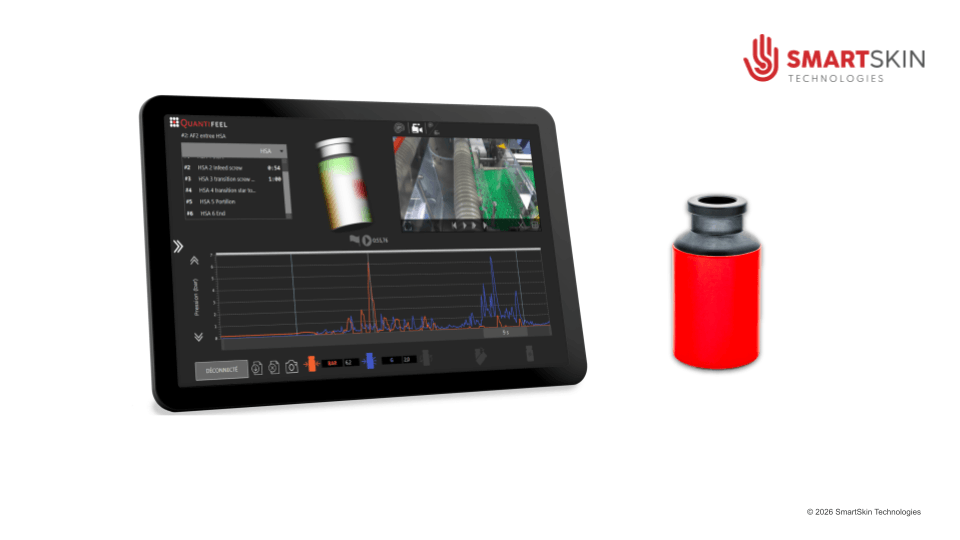
Fill-finish technology transfer is one of the most complex and risk-intensive moments in pharmaceutical manufacturing, and one of the most consequential for product quality, supply reliability, and sponsor confidence. It is a quintessential part of the CMC (Chemistry Manufacturing and Control) along the pre-commercial, commercial and post-commercial phase of a pharmaceutical product life cycle. Critical to the success of the transition to the next phase of development and supply of materials in clinical or commercial phase, technology transfer takes place between a sending site, and a receiving site selected by the product owner in alignment with their strategic and business intent.
During clinical development when a sponsor entrusts a process to a CDMO for manufacturing of clinical materials aligned with the desired Target product profile (TPP), the sending team is not simply handing over the current knowledge related to the product and the processes associated with the way to manufacture and control the desired batches. They are handing over the responsibility for creating a process at scale with consistency, reliability, quality and timely supply to the patients. For CDMOs, meeting those expectations requires more than executing a process accurately as known by the sending site.
Successful CDMO technology transfer depends on the ability to expose, measure, and control the hidden variability that develops between sites. It requires demonstrating scientific understanding, operational excellency, discipline, and control to overcome the subtle gaps in knowledge, differences, sources of variability between the sites, that influence execution of every step in the process. Successful CDMO technology transfer requires not just procedural accuracy, but a measurable, science-based understanding of how equipment and product interact at every stage of the fill-finish process.
During technology transfer, both product specific knowledge (i.e molecule attributes, product dosage form, product specification, stability) and process specific knowledge (i.e scale, site equipment, sterile processing operations integrated with product control strategy) must be shared between sites, understood and appropriately evaluated for potential gaps. During the initiation of the technology transfer the gaps should be identified and discussed between the sending and receiving teams. Transfer activities and their associated studies will aim to eliminate gaps based on their risks to the success of the upcoming milestones.
Across clinical and commercial manufacturing of injectable products, one of the persistent barriers to predictable technology transfer outcomes are the hidden gaps and variability created by the differences in equipment trains. The unknown or uncharacterized operating conditions generated at the interface between the product and equipment at the receiving site become a source of “surprises”, delays, repeated activities, unexpected modifications impacting the TT (Technology Transfer) timing.
Equipment design, mechanical, handling, and equipment-driven forces that shape how a container moves through a fill-finish, inspection, or packaging line go often unmeasured and understood. Yet they are deeply consequential for the outcomes expected from the receiving site. Understanding them is becoming essential for CDMOs operating at the intersection of development, scale-up, and market readiness.
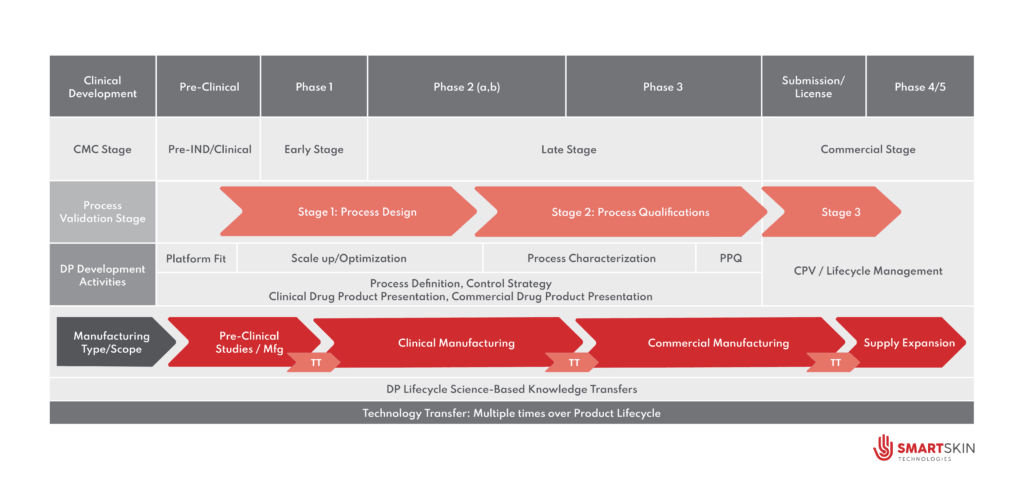
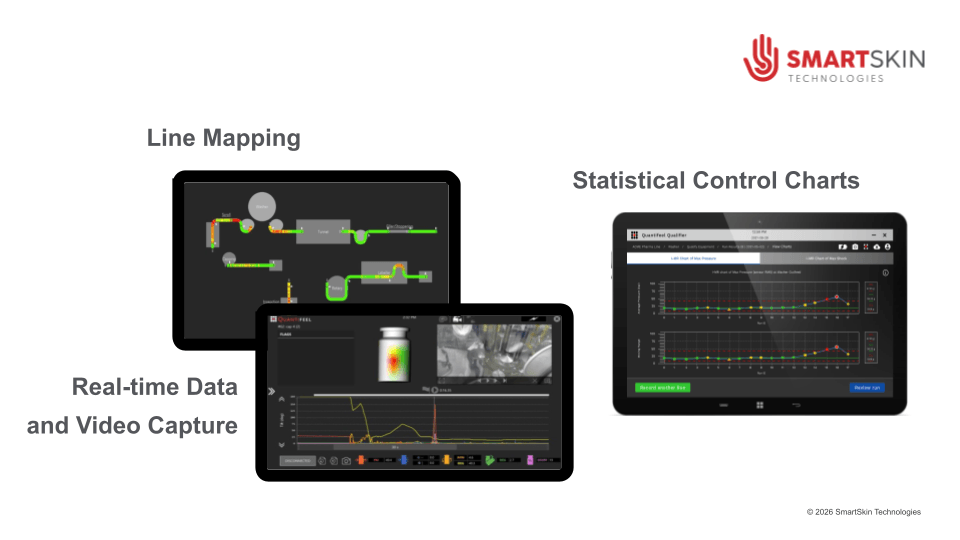
One example of how CDMOs are addressing this challenge is by adopting technologies that make the physical interactions between equipment and product visible and measurable in real time. Rather than relying solely on indirect indicators or post-event inspection, these approaches allow manufacturers to characterize how containers are actually handled as they move through filling and finishing operations.
SmartSkin is the technology recognized and utilized in the pharmaceutical industry for its ability to characterize process performance by visualizing and quantifying the magnitude and location of impactful interactions between equipment and product. Using Digital Container Twins that replicate injectable product presentations in vials, cartridges, syringes, ampoules or delivery devices, manufacturers can evaluate, monitor, and correct undesired interactions as they occur, supporting more predictable and reliable operations.
The Hidden Layer of Variability to Discover and Convert into Transferable Knowledge
Even if the drug product presentation and its assigned CQA remain unchanged during the transfer, the manufacturing environment experienced by the product filled into vials, syringes, cartridges etc. always do. Differences in line design, equipment specific technology, operating conditions and the means to control them can alter how an injectable product is handled throughout production.
These small, often invisible differences influence:
- container integrity
- seal and closure performance
- probability of defects, microcracks or leaks
- line stability and reject rates
- downtime and yield
- batch reliability at clinical and commercial scales
Vial damage in fill-finish operations is rarely random. It is the predictable result of unmeasured mechanical forces acting on containers at specific points along the line. Machinability studies are the standard way to have a quick look at CDMO’s or receiving site equipment fit with a new product presentation. Visual observations and small adjustments can be made to initiate the introduction to the new site. However, this historically used practice does not measure the magnitude of interactions, their location, nor is generating knowledge to be used towards establishing suitable operating parameters.
Therefore, the transfer does not lead to a reliable, repeatable, predictable process; the risk of damage and interruption remains and manifests itself accordingly especially as the scale of the production lots is increasing. To eliminate variation, avoid the events during production and increase the product quality and decrease risks, CDMO’s need to gather such processing knowledge that is measurable, digitalized, available to characterize numerically at each step along the process producing good outcomes.
Sponsors expect CDMOs to not just run the process; they expect them to understand it and defend it in front of regulators. That expectation intensifies as development progresses toward late-phase, where commercial readiness and regulatory scrutiny come into play.
Real-Time Line Mapping and Process Variability Monitoring
Fill-Finish Technology Transfer as a Scientific Exercise
A successful CDMO technology transfer requires the sponsor and CDMO to align on more than process instructions. They must align on to the underlying scientific logic:
- Why parameters were chosen
- How the product handled during development
- Where the process showed sensitivity
- What Mechanical Conditions influence outcomes
- How line performance differed across phases
Rigorous pharmaceutical process characterization is what separates CDMOs that can defend their processes under regulatory scrutiny from those that cannot. For CDMOs, treating technology transfer as a scientific endeavor creates value, trust and confidence in documenting, and deploying the scientific knowledge. It reduces assumptions, accelerates understanding, and establishes the foundation for consistent execution.
Making Mechanical Variability Visible
A growing number of CDMOs are focusing on understanding the physical forces that drive variation across lines, shifts, and facilities. When these forces are measured and analyzed, they reveal a clear picture of how the line interacts with the product.
Visibility enables teams to:
- identify high-risk locations along the line
- tune equipment precisely and consistently
- reduce container damage and mechanical stress
- understand why one site behaves differently from another
- eliminate variability before engineering or commercial batches
- provide evidence-based justification during regulatory review
This systematic approach to fill-finish variability reduction replaces trial-and-error adjustments with informed, data-driven decisions rooted in measured behavior rather than operator intuition. This approach replaces trial-and-error adjustments with informed, data-driven decisions rooted in measured behavior rather than operator intuition. This is the foundation of effective fill-finish variability reduction; moving from observation to measurement, and from measurement to control.
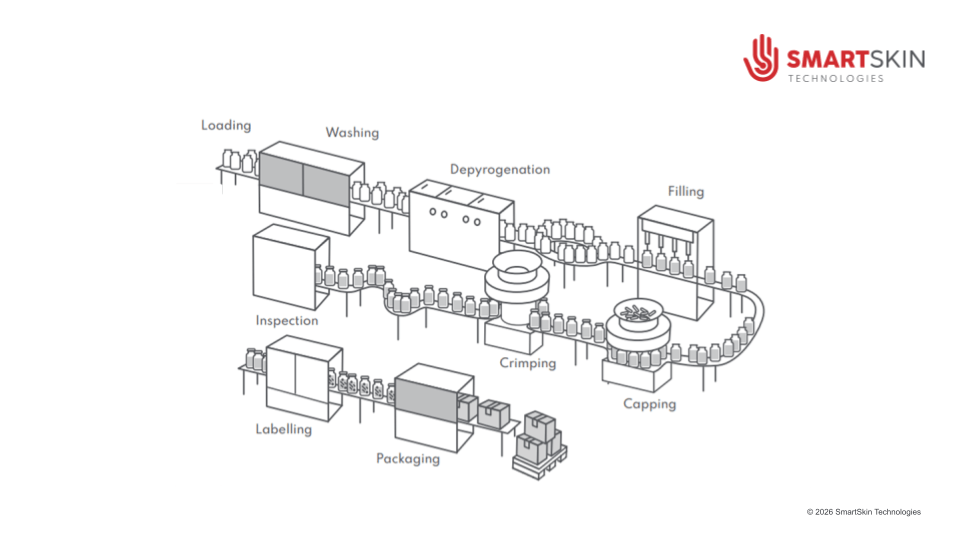
Pharmaceutical Fill-Finish and Packaging Process Overview
Digital Baselines for Successful Fill-Finish Technology Transfer
Establishing a digital baseline is one of the most powerful steps a CDMO can take to ensure successful fill-finish technology transfer. It creates a quantitative reference profile of how a container should move through a well-configured line, a shared scientific language between sponsor and CDMO that captures expected force ranges, acceptable mechanical variation, and the conditions under which the process was previously successful.
More product and process data are electronically captured and become transferable, used for additional analytics and process capability assessments. One of the most powerful tools in modern technology transfer is the creation of a digital baseline, a quantitative reference profile of how a container should move through a well-configured line.
This baseline becomes a shared scientific language between sponsor and CDMO. It captures:
- the expected force ranges
- acceptable mechanical variation
- areas where the product is sensitive to equipment design
- the conditions under which the process was previously successful
With this baseline, CDMOs can evaluate their own equipment, identify differences immediately, and align their setup to the sponsor’s expectations before executing GMP batches. Container closure integrity through technology transfer depends on this kind of quantitative foundation, giving both sponsor and CDMO a shared reference point before GMP batches begin. This is a critical step in CDMO process validation, establishing measurable evidence that the receiving site can reproduce the sponsor's process before full-scale production begins. This not only reduces risk but also shortens the learning curve during scale-up.
For clinical manufacturing where material is limited and expensive, creating a baseline and reducing rapidly the visualized risks and protects scarce supply. For commercial readiness, it builds reliability into the process before full volumes come into play, confidence in the readiness for commercial transfer or PPQ. Such baselines and the associated process knowledge are expediting implementation of changes to the existent processes (equipment changes, adding or changing suppliers of packaging materials) and can be highly valuable to compare performance across lines used for the same product presentation.
From Reactive Corrections to Preventative Control
In many facilities, mechanical issues historically surface only when something goes wrong: a breakage, a leak, vial damage, a fill-finish deviation, or a batch investigation. Vial damage fill-finish events that were once treated as inevitable are now largely preventable when manufacturers have real-time visibility into the forces driving them. Fill-finish variability reduction starts before the first GMP batch runs, not after a deviation has already been filed. By the time an issue is visible, the cost of investment in making the commitment to launch production starts, dealing with deviations, time and materials loss, risks to compromise product integrity within the batch and product loss is already incurred. The majority of such events are now preventable. A preventative mindset flips this dynamic.
When CDMOs quantify line behavior early in the technology transfer cycle, they can:
- detect subtle equipment issues before they affect product
- eliminate sources of stress that lead to damage, major or critical defect microcracks or stabilize and characterize more extensively the processing conditions before start of a new batch
- expedite line turnover, returning faster equipment to production after maintenance activities, initiation of validation activities etc.
- reduce the frequency of deviations and enable faster, evidence-based root cause identification during investigations
- increase the predictability of both clinical and commercial supply
The majority of vial damage fill-finish events traced back to specific equipment interactions that were never measured or corrected at the receiving site. This shift toward prevention reflects the direction in which modern manufacturing and regulatory expectations are evolving. Current regulations emphasize the need for science-based process knowledge, risk management, understanding, improved and integrated controls strategy across product lifecycle control. Technology transfers and the way they are executed are paramount to the success of the business but also in responding to regulatory expectations for science-based process understanding and control.
Strengthening Sponsor Relationships Through Scientific Knowledge and Transparency
Sponsors evaluate CDMOs not only on technical capability, but on how well they communicate. Transparency grounded in scientific data is one of the strongest ways to build confidence during technology transfer.
When CDMOs share with the sponsor tangible insights as seen in equipment/product interaction force profiles, baseline comparisons, line behavior and risk assessments summary they provide sponsors with clear evidence that the process is understood, controlled, and ready to scale.
This transparency transforms the relationship:
- from transactional to collaborative
- from interpretation to evidence
- from reactive problem-solving to shared foresight
It also creates a feedback loop where both parties can jointly refine the process, improving stability, cycle times, and product quality across the lifecycle.

Reducing Vial Chip & Crack Losses by 70%
A leading pharmaceutical manufacturer reduced vial chip and crack losses by 70% with SmartSkin’s Digital Container Twins, eliminating recurring quality investigations and exposing hidden process risks.
Supporting Evolving Regulatory Expectations
Regulators are increasingly focused on ensuring manufacturers and CDMOs engaged in GMP activities demonstrate scientific understanding, not just procedural compliance. Lifecycle documentation, justification of process choices, clear knowledge transfer, and evidence of equipment readiness are central themes in recent guidance.
CDMOs that proactively characterize line behavior and variability are better positioned to support:
- regulatory filings: INDs, BLAs, NDAs, Change management documents
- qualification and validation documentation content
- container closure integrity assessments that carry forward validated knowledge from the sending site as part of a complete technology transfer package
- site inspections with consistent and science-based operations and compliance practices
- comparability studies and change management activities
- commercial scale-up on the same fill/finish lines or alternate commercial lines
- container closure integrity documentation that carries validated knowledge forward as part of a complete technology transfer package
A structured, data-driven approach to CDMO process validation not only strengthens science, it also reduces risk during regulatory engagement.
Conclusion: Scientific Understanding as a Strategic Advantage
As the biopharmaceutical landscape grows more complex, CDMOs face rising expectations around quality, speed, and reliability. Those expectations cannot be met by documentation alone.
The CDMOs that will lead in the next decade are those that treat CDMO technology transfer as a scientific discipline, not a logistical exercise. They are the ones that:
- expose mechanical and handling variability
- build rigorous digital baselines
- understand process behavior across phases
- embrace preventative control
- communicate transparently with sponsors
- treat knowledge as the most valuable asset in technology transfer
When CDMOs transfer knowledge along with products, they strengthen the scientific foundation of every program they support and build trust that endures well beyond the first batch.
This article originally appeared as a guest editorial on PharmaSource, the independent resource for pharmaceutical manufacturing professionals.
Frequently Asked Questions
What is technology transfer in pharmaceutical manufacturing?
Technology transfer is the structured process of moving product and process knowledge from one manufacturing site to another; typically from a sponsor to a CDMO, or between development and commercial facilities. It covers drug product specifications, process parameters, control strategies, and the operational knowledge needed to reproduce consistent, high-quality batches at the receiving site.
Why do fill-finish technology transfers fail or get delayed?
Most delays stem from uncharacterized variability in how equipment physically handles containers at the receiving site. Differences in line design, equipment mechanics, and handling forces create hidden gaps that visual inspections and machinability studies alone cannot detect or quantify. These gaps surface as unexpected breakage, leaks, deviations, or yield loss during scale-up.
What is a digital baseline in pharmaceutical technology transfer?
A digital baseline is a quantitative reference profile that captures how a container moves through a correctly configured fill-finish line including expected force ranges, acceptable mechanical variation, and equipment-sensitive processing zones. CDMOs use it to benchmark their own equipment against the sponsor's prior experience and align line setup before GMP batch execution begins.
How does measuring container handling forces reduce variability?
By quantifying the mechanical forces acting on vials, syringes, and cartridges in real time, manufacturers can identify exactly where and when excessive pressure, shock, or handling stress occurs along the line. This replaces operator intuition with measurable data, enabling precise equipment adjustments, faster root cause analysis, and proactive defect prevention before production begins.
What role does Quality Risk Management play in fill-finish technology transfer?
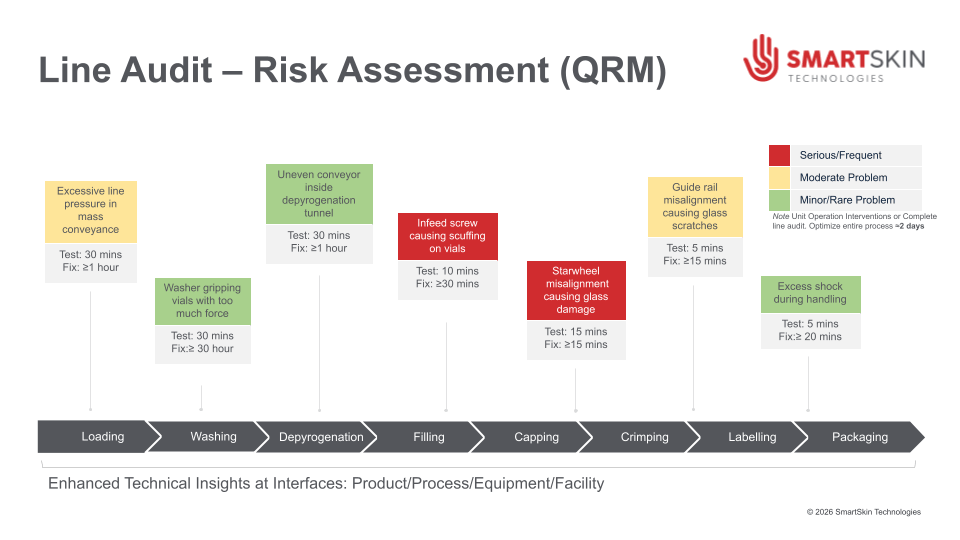
QRM provides a structured framework for identifying, classifying, and prioritizing equipment-product interaction risks at each step of the fill-finish process. Applied during technology transfer, it helps CDMOs and sponsors align on which risks require immediate attention, estimated time-to-detect and time-to-fix, and the corrective actions needed to protect product integrity and transfer timelines.
How does process characterization support regulatory submissions?
Regulators expect CDMOs to demonstrate scientific understanding of their processes, not just procedural compliance. Documented force data, digital baselines, and QRM outputs provide objective evidence for INDs, BLAs, NDAs, change management submissions, validation protocols, and site inspection readiness, all grounded in measurable process behavior rather than experience alone.
What are the 4 models of technology transfer?
The four main models of technology transfer in pharmaceutical manufacturing are: internal transfer between sites within the same organization, transfer from a sponsor to a CDMO, transfer between CDMOs, and transfer from clinical to commercial manufacturing. Each model presents unique challenges in aligning process knowledge, equipment behavior, and quality systems between the sending and receiving sites.
What does fill-finish mean in pharma?
Fill-finish refers to the final stage of pharmaceutical manufacturing where a drug product is filled into its primary container, such as a vial, syringe, or cartridge, and sealed. It is one of the most critical and complex steps in production, requiring precise control of mechanical forces, container closure integrity, and environmental conditions to prevent contamination, vial damage fill-finish defects, and container closure failures.
What are the two types of technology transfer?
The two primary types of technology transfer in pharma are process transfer, which moves manufacturing knowledge and procedures from one site to another, and analytical transfer, which moves testing methods and quality control procedures. Both require rigorous documentation, gap analysis, and validation to ensure consistency and regulatory compliance at the receiving site.
How long does a tech transfer take?
The duration of a pharmaceutical technology transfer varies depending on complexity, but typically ranges from 6 to 18 months for clinical-stage programs and 12 to 24 months for commercial transfers. Factors that extend timelines include uncharacterized equipment variability, incomplete process documentation, and gaps in fill-finish process understanding between the sending and receiving sites. Investing in process characterization early is one of the most effective ways to shorten CDMO technology transfer timelines.